How to remove moss and algae from roof shingles
Black streaks and green moss are common on Houston roofs. Here is what a professional cleaning involves, what not to do — and when the growth is a sign of a bigger problem.
Why moss and algae grow on Houston roofs
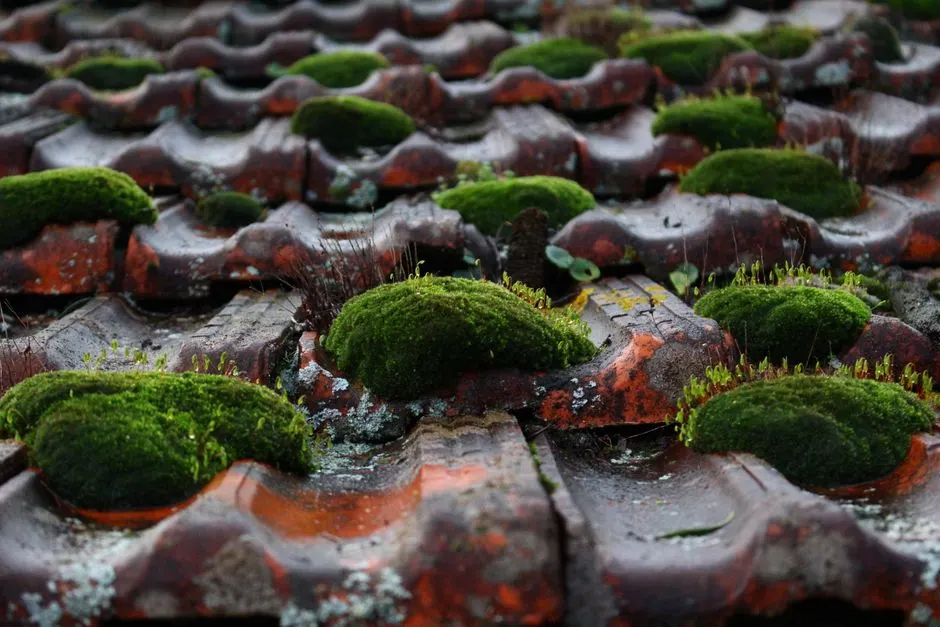
Moss and algae grow on Houston roofs because the climate is built for them: humid subtropical, about 52 inches of rain a year, summer dew points around 77°F, and a canopy of live oaks, pines and magnolias that keeps shaded slopes damp long after the rain stops. The black streaks are Gloeocapsa magma, an algae that feeds on the limestone filler in asphalt shingles. The green growth on the most shaded planes is moss, which holds moisture against the shingle like a sponge.
The growth is worst on north-facing slopes and under tree cover — the Heights, Kingwood and Memorial are the classic cases — and it accelerates the wear: damp shingles lose binder faster, granules wash off sooner, and the roof ages before its time.
What causes black streaks on Houston roofs?
Black streaks are algae, not dirt and not mould from inside the house. The algae colonises the limestone filler in the shingle, spreads down the slope with rainwater, and leaves the dark streaks that run from the ridge to the eave. It is most visible on light-coloured shingles and on the shaded side of the roof.
The streaks are a sign, not just a cosmetic problem. Algae holds moisture against the shingle, and moisture accelerates the binder breakdown that shortens Houston shingle life to 18–25 years. A roof covered in streaks is a roof aging faster than it should.
What a professional moss and algae cleaning involves
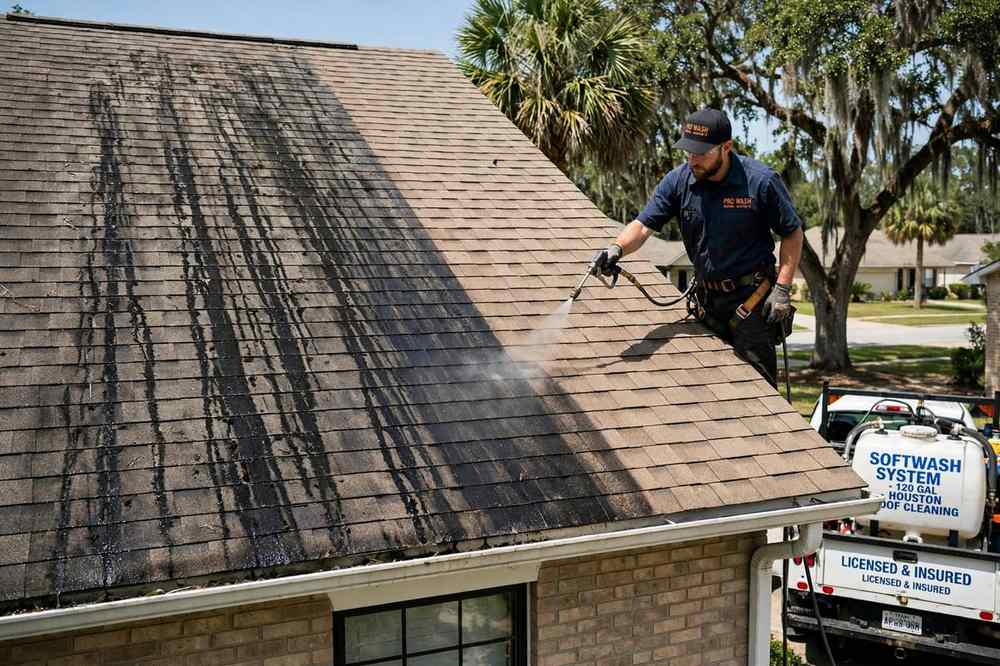
A professional cleaning starts with an inspection: the roofer walks the roof and the attic, checks the flashing and the valleys, and photographs the growth and anything underneath it — curling shingles, lifted tabs, granule loss. The cleaning itself is a low-pressure wash, often called a soft wash, that kills the growth and rinses it away without pressure-washing the shingles.
Pressure washing strips granules and shortens the roof’s remaining life. A roofer who pressure-washes shingles is damaging the roof. The cleaning covers the slopes and the valleys, and the gutters and downspouts the roof drains into — because the growth washes down, and if the gutters are not cleared, the next rain backs water up under the first row of shingles.
What a roofer checks while cleaning your roof
- Flashing. Chimney flashing, valley flashing and skylight curbs — the growth hides cracked flashing, and the cleaning is the moment it is seen.
- Shingle condition. Curling, cracking and granule loss show up clearly once the growth is off. A roof losing granules is losing its UV protection.
- Valleys and gutters. Pine needles and oak leaves pack the valleys and hold water against the shingles. The cleaning clears them.
- Attic ventilation. Poor ventilation keeps the roof damp from below and grows algae from the inside out. The inspection covers ridge and soffit vents.
- The deck underneath. If the growth has been there for years, the deck may be soft. A roofer probes it — a new cleaning over a rotted deck is cosmetic.
Common mistakes to avoid
- Pressure-washing shingles. It strips granules and voids the shingle’s remaining life.
- Scrubbing or scraping the growth off. A brush or scraper takes granules with it. The growth is killed and rinsed, not scrubbed.
- Cleaning the roof and ignoring the gutters. The growth washes into the gutters. If they are not cleared, the next rain backs water up under the shingles.
- Treating the streaks and ignoring the cause. If the roof is shaded and damp because of poor ventilation, the growth comes back. The inspection should cover ventilation, not just the wash.
When to call a professional
Call a roofer if the shaded slopes show black streaks or green moss, if the growth has been there for more than a season, or if the roof is past 15 years old and the streaks are spreading. A cleaning is also an inspection — and if the growth is hiding curling shingles or a soft deck, you want to know now, not at the next leak. Call Thomas Family Roofing at (936) 873-7200 or see our roof cleaning page.
Frequently Asked Questions
How do I remove moss and algae from roof shingles in Houston?
Have a roofer do it with a low-pressure soft wash that kills the growth and rinses it away. Do not pressure-wash shingles and do not scrub or scrape — both strip granules and shorten the roof’s life.
What causes black streaks on Houston roofs?
Black algae — Gloeocapsa magma — feeding on the limestone filler in asphalt shingles, worst on damp, shaded slopes. It holds moisture against the shingle and accelerates wear.
Is moss on a roof a problem, or just cosmetic?
It is a problem. Moss holds moisture against the shingle like a sponge, accelerates binder breakdown, and hides curling shingles and cracked flashing underneath.
How often should a Houston roof be cleaned?
Every 12 to 24 months for most Houston roofs — closer to 12 months under live oaks and pines. See our guide on how often to clean your roof in Houston.
Get help with Roofing in Houston
Call Thomas Family Roofing at (936) 873-7200 and tell us what your roof is doing — we will give you a straight answer and a written scope. Or send a message through the contact page.