Focused arrival windows
Useful updates and clear arrival timing.
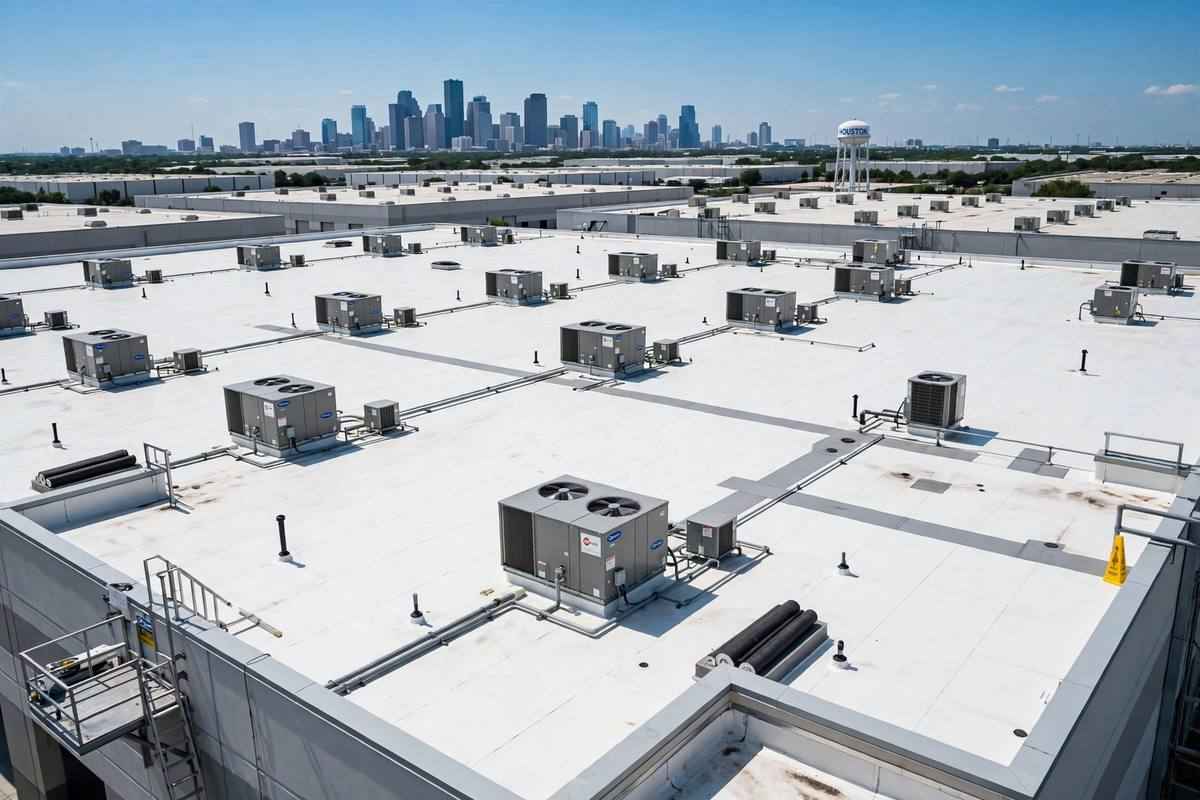
A commercial roof in Houston is a flat system that has to shed 51 inches of rain a year and hold through hurricane-season wind. Offices, warehouses, and retail buildings in the Energy Corridor, Westchase, and the Galleria carry TPO, PVC, modified bitumen, or built-up membranes, and the failures are ponding, parapet leaks, and drains that cannot keep up. Start with a roof inspection and a written scope for the building in front of you.
Useful updates and clear arrival timing.
Review the approach and price before deciding.
Equipped vehicles and respectful cleanup.
Neighbors serving neighbors with follow-through.
A commercial job is scoped to the building: its membrane, its drains, its parapets, and who owns what. Here is what is part of the work.
TPO, PVC, modified bitumen, and built-up, chosen for the building, the slope, and the use. A warehouse and a retail storefront do not get the same system.
Interior drains, scuppers, and tapered insulation are checked first. Standing water is what kills a flat membrane, and Houston rain finds every low spot.
Parapet walls, coping, and edge details are where wind-driven rain gets in. Edge securement is a topic on every commercial scope.
HVAC curbs, vents, and skylight curbs are flashed as part of the system. A membrane is only as good as its penetrations.
The deck and insulation are inspected before any new membrane goes on. A new cap sheet over a rotted deck is money wasted.
Commercial re-roofing needs a City of Houston permit, and the permit and inspection are part of the written scope.
Tell us the building type, the membrane, and what the roof is doing. We will talk through the next step and what an inspection covers.
Commercial roofing in Houston is flat roofing at scale: large membrane areas, parapet walls, interior drains, and rooftop equipment, all under a climate that delivers about 51 inches of rain a year and hurricane-season wind.
The Galleria, the Energy Corridor, and Westchase are the commercial centres, and their roofs are TPO and PVC flat roofs on commercial buildings and townhome rooftops, with modified bitumen on older flat sections. High-rise membranes from the 1980s and 1990s are 30 to 45 years old, at or past replacement. Townhome membranes from the 1990s and 2000s are in the 20 to 30 year delamination zone.
Pricing is the least settled part of commercial roofing. Texas contractor sources put all-in commercial tear-off and replacement at $14 to $20 per sq ft of roof surface, and recover at $9 to $15, with the scope labelled every time. These are published market ranges, not this business's prices. Your price depends on the building's size, membrane, deck condition, and drainage, and is set out in a written scope after an inspection.
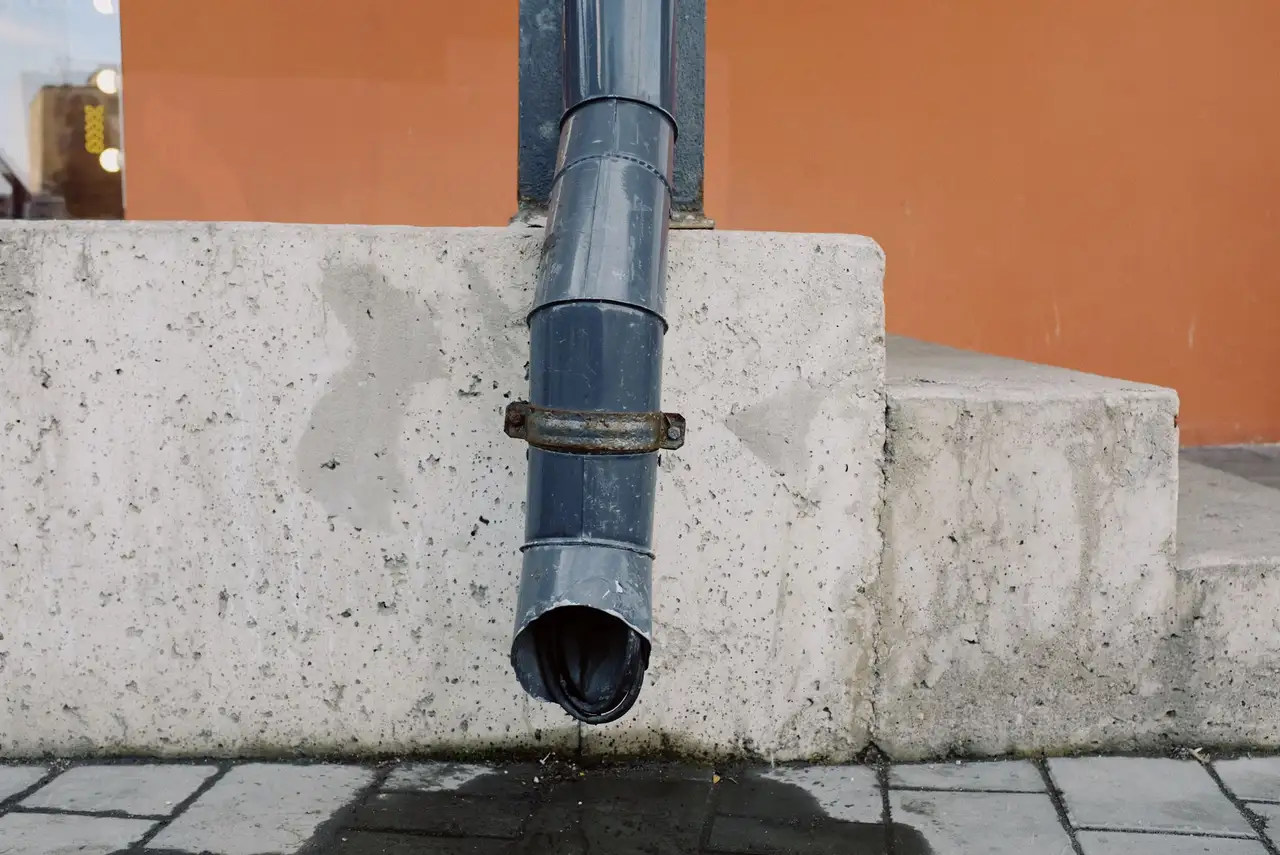
We walk the membrane, check drains, scuppers, parapets, and penetrations, and photograph what we find. You get a written scope for the building.
TPO, PVC, modified bitumen, or built-up, chosen for the building, the slope, and the use. The membrane is named before any price is discussed.
Commercial re-roofing needs a City of Houston permit. The permit is part of the written scope.
Tear-off to the deck where the deck or insulation has failed, or a recover where the existing system can carry it. The choice is made on what the inspection shows.
We walk the roof with you and hand over the photos of the membrane, drains, and flashing details for your records.
Heat-welds TPO and PVC seams so the membrane is one continuous sheet.
Checks the deck and insulation for hidden moisture before new material goes on.
Takes a small core sample so the layers, insulation, and deck can be seen, not guessed at.
Checks that interior drains and scuppers can move the water Houston rain delivers.
Keep membrane courses straight and cut clean edges at parapets and penetrations.
Picks up fasteners and debris from the roof and the ground below.
Safe access and staging across large flat roof areas.
Seals flashing joints and penetrations as part of the work.
Every cut, curb, and flashing bend is measured to the building in front of us.
Photos of the membrane, drains, and finished roof go into your file.
Interior drains were undersized for the roof area and water stood for days after rain. We re-sloped with tapered insulation, cleared and resized the drains, and replaced the membrane.
Wind-driven rain came through parapet transitions and into the top floor. We re-flashed the parapets, resealed the coping, and documented the scope for the building's board.
The membrane was blistering and the insulation beneath it was wet. We tore off to the deck, replaced the wet insulation, and installed a new system.
Commercial roofing in Houston is a different market from residential. The buildings are bigger, the membranes are flat, and the owner is often a property manager or a board, not a homeowner. In the Galleria and Downtown, the roof may belong to a condo association. In the Energy Corridor and Westchase, the buildings are offices and warehouses with their own approval chains. We scope each building to its membrane, its drains, and its owner. Call (936) 873-7200 to talk through your building.
Offices and warehouses along I-10, with large flat roofs and commercial wind uplift as a distinct risk.
Office and retail flat roofs, with ponding and drainage as the recurring failure.
High-rise flat membranes and townhome rooftops, where the condo declaration decides who owns the roof.
High-rise flat membranes and loft conversions, where the membrane age and the residential conversion age are different numbers.
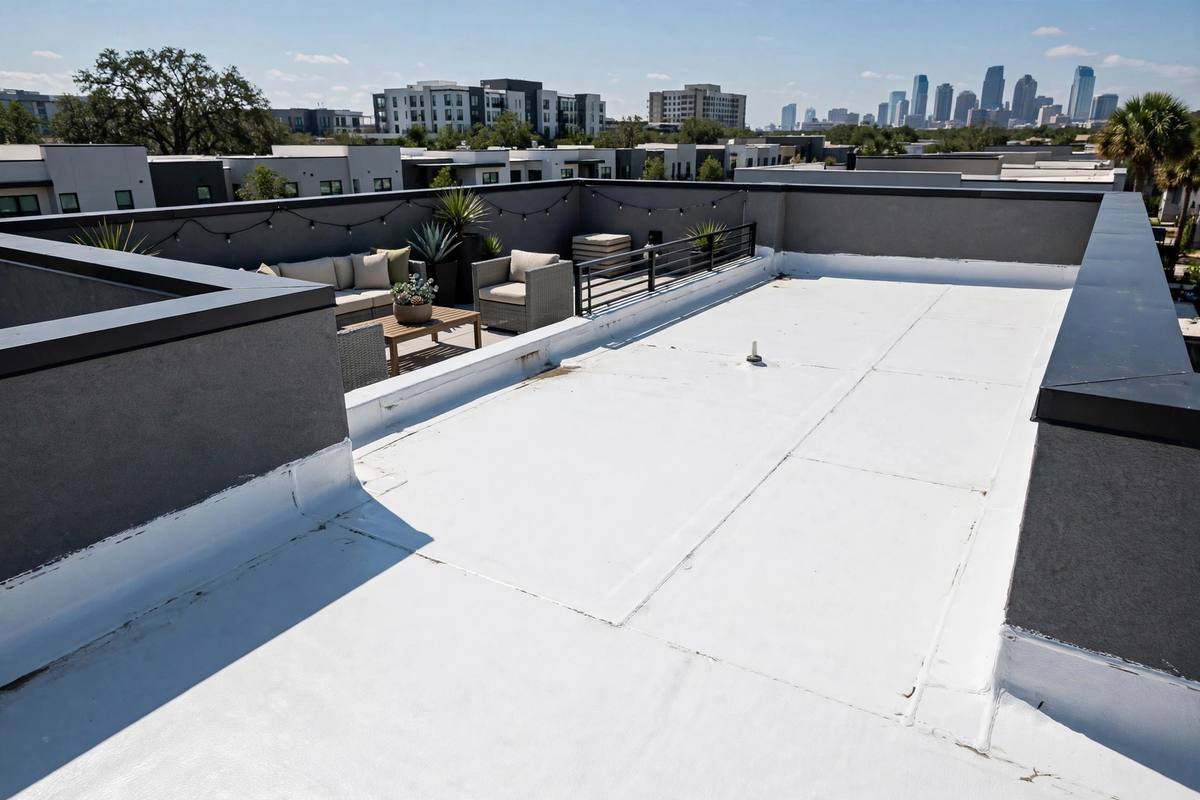
Townhome flat sections and converted warehouses, with rooftop terraces and skylight curbs as leak sources.
the failure that kills flat membranes. Drains, scuppers, and tapered insulation are part of every scope.
wind uplift on large flat roofs and parapet edges. Edge securement is a topic on every commercial scope.
A TPO roof that held standing water for days after every rain, with seams starting to fail.
We re-sloped with tapered insulation, fixed the drains, and replaced the membrane. The roof sheds water now.
Maintenance: Check drains and scuppers each autumn and after every tropical storm. A blocked drain is a pond.
Wind-driven rain through parapet transitions, leaking into the top floor after every storm.
We re-flashed the parapets and resealed the coping, and documented the scope for the building's board.
Maintenance: Walk the parapets after any high wind. Coping and flashing are the first things wind works on.
A blistering modified bitumen roof with wet insulation underneath, found by core sampling.
We tore off to the deck, replaced the wet insulation, and installed a new system.
Maintenance: Core-sample the roof before any recover. A new membrane over wet insulation fails fast.
Commercial roof problems in Houston trace back to ponding, parapets, drains, and membranes past their life. Here is what we fix.
Standing water dissolves seams, rots decks, and adds weight a flat roof was not built to carry. We check drains, scuppers, and slope, and re-slope with tapered insulation where the roof has true zero-slope areas.
Wind-driven rain through parapet transitions and coping is the Galleria and Downtown failure mode. We re-flash parapets and reseal coping as part of the scope.
High-rise membranes from the 1980s and 1990s and townhome membranes from the 1990s and 2000s are at or past replacement. We inspect, core-sample where needed, and say plainly whether repair or replacement is the honest answer.
In high-rise towers and townhome clusters, the roof membrane often belongs to the association, not the unit owner. We map each line item to the right owner in the written scope, so the board and the owner are not arguing about the same leak.
Our crews work on Houston commercial buildings every week, from Energy Corridor offices to Galleria retail to Westchase warehouses. Every job is photographed at the membrane, drain, and flashing stages, and the permit inspection is part of the job. That is what a building owner can actually check: the photos, the permit, and the written scope.

“I hired Thomas Family Roofing for a flat roof repair after hearing good things from friends and reading strong reviews. The whole experience was smooth and professional from start to finish. They also cleaned out the roof drains since they were clogged.”
“We contacted Thomas Family Roofing for an estimate on repairs for our metal roof in Houston. Luis came out, inspected the roof in person, and explained clearly what needed attention, including a few details about flashing and panel areas that other roofers had missed.”
“I had storm damage on my roof, and after the first insurance adjuster met with another roofing company, the claim was not approved for roof repair. My niece suggested I call Johnathan, and he came out, met with a different adjuster, and helped get the roof replacement approved.”
Rating 4.9 out of 5 from 46 Google reviews (42 five-star, 4 four-star). A further 41 reviews are visible only as an aggregate on Google. See all reviews on Google.
TPO, PVC, modified bitumen, and built-up flat systems. The membrane is chosen for the building, the slope, and the use, and named in the written scope before any price is discussed.
Published Texas contractor sources put all-in commercial tear-off and replacement at $14 to $20 per sq ft of roof surface, and recover at $9 to $15. These are published market ranges, not this business's prices. Your price depends on the building, membrane, deck, and drainage.
Often the condo association, not the unit owner. In 1980s and 1990s towers, the recorded declaration usually puts the building envelope, including the roof membrane, in the association's hands. The written scope maps each line item to the right owner.
Yes. Commercial re-roofing inside the city needs a City of Houston permit, and the permit and inspection are part of the written scope. In unincorporated Harris County there is no residential roofing permit, and commercial rules are checked per address.
Not seeing your question? Call (936) 873-7200 and talk it through with the local team.
Ask the local teamThe parent page for Houston flat roofs: TPO, PVC, modified bitumen, and built-up, and how each fails here.
View service60-mil TPO is the commercial flat roof Houston builds most. Seams, drainage, and when it fits.
View service
A rubber membrane for flat roofs where it fits. Seams, ponding, and when it is the right choice.
View service
How a claim works in Texas, what ACV and RCV mean, and why no roofer can promise an approval or waive your deductible.
View service
Call (936) 873-7200 and tell us what you are seeing. We will talk through what is happening, what an inspection covers, and the next step. Or send a service request with the form and we will call you back.