Why is there water staining on my ceiling in the Heights
That brown ring on your ceiling is not just a stain — it is a sign of a roof leak. Here is why it happens in the Heights, and what a roofer checks before it spreads.
The short answer: your roof is leaking
Water staining on your ceiling in the Heights almost always means water is getting in from above — most often through the roof, and in the Heights, most often through the flat or low-slope addition at the back of the house. The stain is the symptom. The entry point is usually a few feet away, and water travels along the decking before it finds the ceiling.
What causes ceiling water stains in the Heights, Houston TX
- The flat addition membrane. Many Heights bungalows have a pitched shingle main roof and a flat or low-slope membrane over a rear addition, an enclosed porch or a converted carport. The membrane is the shortest-lived element of the house — 15–25 years, often less under ponding — and it fails invisibly, rotting its deck while the main roof looks fine.
- Failed flashing. Chimney flashing, valley flashing and wall transitions where the addition meets the main house. The joint between the two roofs is the leak point.
- Clogged valleys and gutters. The Heights has heavy mature canopy — live oaks and magnolias — and leaves pack the valleys and gutters, backing water up under the first row of shingles.
- Attic ventilation. Pre-1980 bungalows with pier-and-beam framing and narrow attic cavities were built with gable or box vents only, well short of balanced ridge-to-soffit ventilation. Houston humidity plus poor ventilation rots decking from inside the attic without visible interior staining — until the ceiling shows it.
- Storm damage. The May 2024 derecho hit the Heights, Timbergrove and Lazybrook corridor hardest, and Hurricane Beryl followed in July 2024. Lifted shingles and tree limbs are the usual storm causes here.
How to tell if the stain is from a roof leak or something else
A stain that grows after rain, or appears after a storm, is a roof leak until proven otherwise. A stain that stays the same size, or grows without rain, is more likely plumbing — and the Heights has plenty of older plumbing under pier-and-beam floors. The roofer’s check is the attic: water tracks on the rafters and decking, daylight through the deck, and insulation disturbed by a leak all point to the roof. If the attic is dry and the stain is below a bathroom, it is plumbing, and we will tell you so.
Why Heights homes are prone to roof leaks
The Heights is the only inner-loop area where a single property routinely has two different roof systems of different ages — a pitched shingle main roof and a flat or low-slope membrane addition that ponds, delaminates and rots its deck invisibly. That is the “two-roof house,” and it is the Heights roofing story.
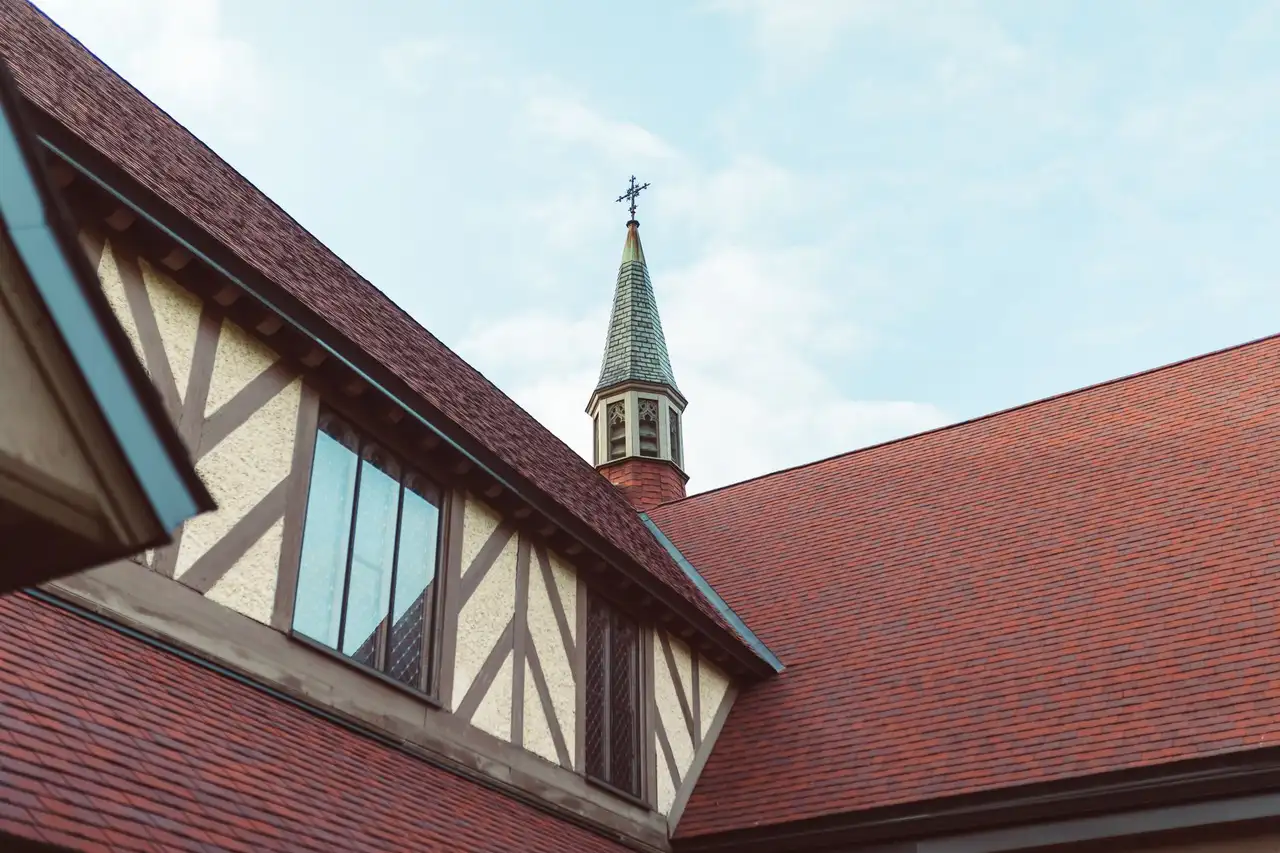
The houses are also old: 1890s–1930s bungalows, many on pier-and-beam, with complex historic rooflines — low-pitched Craftsman gables with exposed rafter tails, steep Tudor gables — and the 1990s–2010s townhome cohort beside them is in its first or second replacement window. Add the heaviest canopy in the inner loop, and the roof never fully dries after a storm.
What a roofer checks for a ceiling stain in the Heights
A roofer checks the flat addition first: the membrane, the seams, the ponding, and the deck underneath — probing for soft spots, because a new cap sheet over rotted decking is money wasted. Then the flashing where the addition meets the main roof, the valleys, the gutters, and the attic ventilation. The inspection is photographed and written, so you can see what the stain is telling you.
One more check comes before any work: the review layer. Portions of the Heights fall in City Historic Districts — Heights East, Heights West, Heights South, plus Norhill — where the Houston Archaeological and Historical Commission (HAHC) must issue a Certificate of Appropriateness before exterior work including roofing material changes, typically a 30-day review. Swapping 3-tab for architectural shingles or upgrading to standing-seam metal can require a COA. We check which layer applies to your address before work starts.
Common mistakes to avoid
- Painting over the stain. The stain is the symptom. Paint hides it and the water keeps coming.
- Fixing the shingle roof and ignoring the flat addition. On a two-roof house, the flat membrane is usually the leak — and the one that rots the deck invisibly.
- Sealing from inside the attic. Sealant in the attic traps water in the deck and rots it faster.
- Starting work without the HAHC check. In a Heights historic district, a material change without a Certificate of Appropriateness can mean forced removal at your own cost.
When to call a professional
Call a roofer as soon as you see a ceiling stain — not after the next storm. The flat addition membrane is the usual suspect in the Heights, and the longer water sits in its deck, the more it costs to fix. Call Thomas Family Roofing at (936) 873-7200 or see our roof leak repair and roofing in the Heights pages.
Frequently Asked Questions
Why is there water staining on my ceiling in the Heights?
Water is getting in from above — most often through the flat or low-slope membrane over a rear addition, or through failed flashing where the addition meets the main roof. The stain is the symptom, not the entry point.
What is the two-roof house in the Heights?
Many Heights bungalows have a pitched shingle main roof and a flat membrane addition of a different age. The membrane is the shortest-lived element and fails invisibly, rotting its deck while the main roof looks fine.
Do I need approval before roof work in the Heights?
Possibly. Portions of the Heights are City Historic Districts where HAHC must issue a Certificate of Appropriateness before roofing material changes — typically a 30-day review. Check which layer applies to your address first.
Is a ceiling stain always a roof leak?
No. A stain that grows after rain is usually a roof leak; a stain that grows without rain may be plumbing. A roofer checks the attic for water tracks to tell the difference.
Get help with Roofing in Houston
Call Thomas Family Roofing at (936) 873-7200 and tell us what your roof is doing — we will give you a straight answer and a written scope. Or send a message through the contact page.